
Building Command Presence

At Southeast County Young Marines, we tell everyone of our leaders that command presence is not about being loud or bossy, it is about posture, authority, composure, and confidence, especially when things get hard. We want our kids to become the steady lighthouse in the middle of the storm, not a weathervane that spins every time circumstances change. We teach them that command presence is a learned skill, not something you are magically born with, so any motivated Young Marine in our unit can grow into a leader others trust and respect. From the beginning, we frame it this way: if they are willing to practice, handle feedback, and step into responsibility, we will give them the tools to develop real command presence that carries over into school, home, sports, and life.
TECHNICAL AND TACTICAL PROFICIENCY
One of the first pillars we build in our Young Marines is technical and tactical proficiency. At Southeast County, we expect our leaders to actually know their field skills, not just pass a test once and forget them. That means they learn how to pack and carry gear correctly, use smart hiking techniques, navigate with basic land navigation skills, set up camp, build a safe fire when appropriate, and understand basic first aid and safety with outdoor tools and stoves. We train them to move a team safely, forming up their squad correctly, keeping proper intervals and distance, using the right formations for the environment, and constantly watching for hazards so no one gets hurt. They learn to follow and enforce safety rules, from “no one left behind” to proper first aid, hydration, and heat or cold precautions, and we hold them to the standard in the Young Marines Guidebook for how they act, speak, wear the uniform, drill, and lead. Our older Young Marines are expected not just to know these skills for themselves, but to demonstrate and teach them to younger Young Marines, staying calm when gear is lost, minor injuries happen, the weather changes, or there is confusion in formation, and keeping the squad organized and moving instead of falling apart.
DECISIVENESS
The second major piece of command presence we develop is decisiveness. In our unit, when a Young Marine leader receives an order, we teach them that their job is to turn that order into action quickly, not to stand still and overthink. We practice moving from “I’ve been told what to do” to “Here’s how we’re going to do it” without wasting time in long brainstorming sessions or “what if” paralysis. Our kids learn to confirm the mission by repeating back the task, the time, and the desired end state so there is no confusion, then make a simple plan: who is doing what, in what order, and where they are going. We coach them to give clear instructions right away, accept that the plan will not be perfect, and adjust on the move instead of freezing because they don’t have every answer. For example, if they are told, “Take your squad to the PT field, recover the lost gear, and be back in 10 minutes,” we train them to immediately assign sectors, set a time hack, and move the squad out, rather than standing there debating every possible problem. The standard we set at Southeast County is simple: be quick to make a clear decision and put the plan into motion, and slow to second‑guess yourself unless you have a truly good reason to change course.
COMPOSURE
The third area we are constantly reinforcing is composure. We do not want emotional roller coasters leading our squads; we want kids who can stay calm, cool, and collected whether the news is good or bad. At Southeast County, our Young Marines quickly learn that their squad is reading their face, voice, and body language every second, and that if they look panicked, frustrated, or angry, their team will absorb that same stress. We put them into situations with tight timelines, confusion, and pressure from training staff on purpose, so they can practice being the anchor in the middle of the storm: keeping their voice level and controlled even when being rushed, giving short and clear directions instead of yelling or complaining, and focusing on “What needs to happen next?” instead of “Why is this happening to me?” We also teach them how to handle corrections from senior leaders with a simple “Aye, sir/ma’am” and then turn and move their squad calmly, without passing their own stress downward. At Southeast County, eye‑rolling, sarcasm, and emotional outbursts from leaders are not acceptable, because they break trust and distract the squad. Over time, our Young Marines see that when they remain calm, their team stays calmer as well, and that is a powerful life skill far beyond our drills at the Legion or in the field.
CLEAR COMMUNICATION
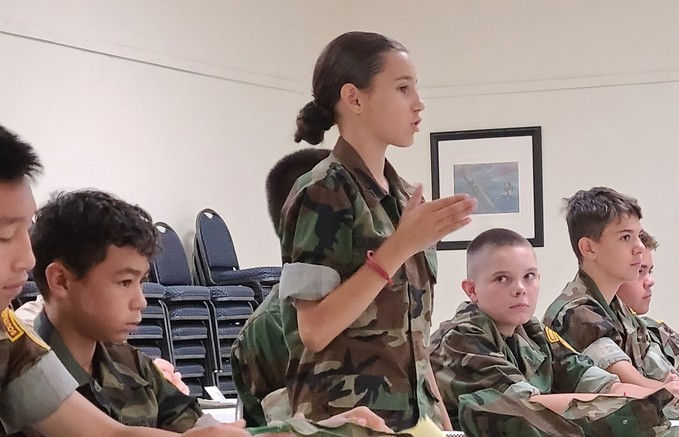
Fourth, we invest heavily in teaching our kids to communicate clearly. Command presence at Southeast County is not about how much you say, it is about how clearly and confidently you can get your message across so everyone knows what to do, how to do it, and when it must be done. We train our Young Marines to speak loud enough for everyone to hear, without mumbling or trailing off, and to use an assertive, steady tone that sounds like they expect to be obeyed, but without being angry or disrespectful. They practice keeping instructions short and to the point: who, what, where, when, and any key standard that matters. We teach them to face their squad, make eye contact, and stand tall instead of talking while walking away or slouching, because their body language should match their message. We also train them to avoid slang, inside jokes, and side chatter when giving orders so the mission stays clear, and we have them check understanding by asking for questions or having the squad repeat back key parts of the instructions. A leader in our unit does not say, “Uh, okay guys, we’re just gonna kinda head over there and look around.” Instead, we train them to give clear direction: “1st Squad, listen up. We are moving to the PT field in column, arm’s length apart. When we get there, this Alpha team searches the left side, and Bravo team searches the right. We step off in three minutes.”
APPEARANCE AND BEARING
Finally, we place a strong emphasis on appearance and bearing, because we know that how a young person looks and carries themselves sends a message before they ever say a word. At Southeast County, we want our Young Marines to be squared away, physically fit, and proud of their unit, so we help them understand that command presence starts the moment someone sees them. We show them what a sharp uniform looks like: a correctly shaped cover, a clean blouse with proper patches, clean trousers, no loose threads, straight name tapes, and ribbons and insignia placed exactly according to the Young Marines Guidebook. We teach them to keep their boots shined and clean, to fix scuffs instead of ignoring them, and to show up early for formations, PT, and events with all required gear present, serviceable, and organized—no constant borrowing, no repeated “I forgot.” Fitness is also part of this standard; we encourage them to stay in good physical condition so they can keep up with or out‑perform their squad on PT, hikes, and field activities. Most importantly, we train them to carry themselves with confidence: standing tall, shoulders back, eyes up, and moving with purpose instead of dragging or slouching. When younger kids see a leader whose uniform is sharp, boots are shined, gear is ready, and who is always on time and fit, they learn what “right” looks like, and our older Young Marines understand that their job is to be that example every time they put on the uniform.
When families join Southeast County Young Marines, they are not just signing up for a youth program; they are stepping into a culture where we deliberately build command presence in their kids step by step. Through technical and tactical training, decisive action, composure under pressure, clear communication, and a high standard of appearance and bearing, we are shaping boys and girls into confident, capable leaders who can be trusted when things matter. If you want your child to learn how to stand tall, think clearly, and lead others with confidence in real‑world situations, this is exactly what we work to instill in every Young Marine in our unit. Contact us today or click here to get started.

Comments